house


Star background

 heart Glitter graphics
Showing posts with label Diet and Nutrition. Show all posts

Monday, October 25, 2010

Disadvantages of an Unhealthy Diet

By Leslie Whittaker, eHow Contributor


Do you regularly find yourself skipping meals or heading to a drive-thru? With our hectic and demanding schedules, most of us don't devote the time or attention we should to eating right. Your diet is one aspect of your health you can control. Every bite you take matters. Unhealthy eating habits tell your body to react in some very negative and life-threatening ways - ways that might not even be visible until it's too late.

Eating foods that lack essential vitamins, minerals and nutrients is unhealthy. These types of foods also tend to be high in saturated fats, sugar and alcohol. A diet low in protein and high in processed and fried foods, omega 6 fatty-acids and high glycemic carbohydrates negatively impacts your health.

Malnutrition

Whether you're eating too much or not enough, if you're not eating a balance of the right types of foods, you are depleting your body of the essential vitamins and minerals it needs to function optimally. A lack of certain vitamins can cause deficiency diseases like scurvy or rickets. Mineral deficiencies can lead to weak or brittle bones, anemia and an irregular heartbeat. Not only do you need to make sure you're eating enough food throughout the day, but you also need to make sure it's a healthy balance of lean protein, carbohydrates and fats.

Obesity

The most obvious, visible and common result of unhealthy eating is obesity. According to the "Journal of the American Medical Association," about 65 percent of North Americans are overweight. While obesity is visible on the outside, the real concern is what's happening microscopically. When you eat excess amounts of high-glycemic carbohydrates (such as fried foods, chips, cookies and breads), your body begins to produce excess amounts of insulin. Ultimately, this extra insulin tells your body to store fat, speeds up the aging process and is the precursor to insulin resistance in the body. Furthermore, excess insulin not only tells your fat cells to store more fat, it also inhibits the release of stored fat back into the body to be used as energy.

Chronic Disease

As a result of unhealthy eating habits, like eating omega-6 fatty-acids (vegetable oils like corn, soy, sunflower and safflower), your body develops silent inflammation. Unlike inflammation, which causes aches and pains, silent inflammation goes unnoticed in the body until it develops into chronic conditions like cardiovascular disease, diabetes, arthritis and cancer. Silent, low-level inflammation accelerates the development of chronic diseases.

Excessive Weight Loss
For those who frequently miss meals or consume far fewer calories than their bodies need, they may experience excessive weight loss as a result of their unhealthy eating habits. Losing weight through improper nutrition and calorie consumption is not a healthy way, and you'll lose fat instead of muscle. Just because you're losing weight doesn't mean you're healthy. This type of weight loss lowers your metabolism and causes your body to use your muscles and organs for energy.

Accelerated Aging

Food can decrease or accelerate the aging process. There are four main contributors when it comes to aging: free radicals, blood sugar, cortisol and insulin levels, all of which are affected by food. Hormones and cells need to be able to communicate with one another effectively in order to maintain equilibrium in your body. The right balance of hormones slows the aging process, while the wrong balance accelerates it. Unhealthy eating habits, as you can guess, raise your free radical, blood sugar and insulin levels, accelerating the aging process. Thus, unhealthy eating can make you look years older than you really are.

Sunday, October 24, 2010

10 food pairs to supercharge your diet


Two is better than one - 10 food pairs to supercharge your diet 

Consuming specific healthy foods together can pack an even bigger nutritional punch. Here are 10 foods pairs that will supercharge your diet.


Two is better than one

Laurel and Hardy, Thelma and Louise, Brad and Angelina. Some pairs are just meant to be (although the Brangelina pairing may be up for debate). Various nutrients go well together, too. 
As a registered dietitian, I know combining certain foods can up their nutritional value, and help your body absorb and utilize all of their benefits more effectively. And research is revealing new pairings all the time. "It’s like adding 1 plus 1 and getting 4 instead of 2," says Elaine Magee, a registered dietitian and the author of Food Synergy. The total is greater than the sum of the individual parts." Want to get more nutritional bang from your meals? Try out these 10 power-food combinations.


Yogurt and bananas - 10 food pairs to supercharge your diet
Dynamic duo because: These repair muscles after a workout.
"Research shows that consuming these two macronutrients together shortly after exercise speeds muscle recovery," says Monique Ryan, a sports dietitian and the author of Sports Nutrition for Endurance Athletes. Combining carbs and proteins increases levels of insulin. "More insulin allows muscles to quickly soak up repair nutrients like amino acids and glucose after a workout so they become stronger." 

Try this: Make a post-workout shake: Blend together 1/2 cup (125 mL) each of low-fat milk and protein-rich yogurt with a carb-dense banana, 1/2 cup (125 mL) frozen blueberries and 1 Tbsp (15 mL) honey 
or maple syrup.

Fish and wine

Dynamic duo because: The wine helps soak up healthy omega-3 fats from fish.Fish and wine - 10 food pairs to supercharge your dietItalian researchers recently found that women who consumed as little as one glass of wine a day had higher blood levels of the omega-3 fats found in fish such as trout, salmon and sardines. The same results were not found for beer or spirits. Scientists believe that heart-healthy polyphenol antioxidants in wine might be responsible for improved omega-3 absorption. These much-lauded disease-fighting fats may also be associated with a lower risk of macular degeneration—the leading cause of blindness. Whether you prefer Chardonnay or Merlot, you can still get the same health benefit. According to a study in the  Journal of Agricultural and Food Chemistry, white wine contains its own distinct polyphenol compounds that give it the same heart-protective qualities as red. But drinking too much alcohol is associated with increased breast cancer risk, so limit wine consumption to one or two glasses per day. ’

Try this: Besides enjoying a glass with a fish entrĂ©e, you can make a marinade. Here’s how: Combine equal amounts of olive oil, soy sauce and a dry wine like sherry in a large bowl. Add rainbow trout fillets, or another type of fish that's high in omega-3 (skin on or off), and marinate for one hour in the fridge before cooking.


Apples and raspberries


Dynamic duo because: Together they improve the disease-fighting powers of antioxidants.
Apples and raspberries - 10 food pairs to supercharge your dietIf apples could speak, they would tell raspberries, "You complete me." A study in the Journal of Nutrition determined the antioxidant ellagic acid (found in raspberries, pomegranates, walnuts and cranberries) enhanced the ability of quercetin (an antioxidant found in apples, grapes, onion and buckwheat) to kill off cancerous cells. Food scientists have discovered thousands of such bioactive phytochemicals in fruit, vegetables, beans, nuts and whole grains. "Researchers are now discovering that these chemicals often work better in pairs or groups, proving that supplements with single nutrients just can’t match the healing power of whole foods," says Magee.

Try this: Make an antioxidant dessert: Combine diced apple, grapes and 
raspberries, and top with pomegranate seeds and walnuts.

Salads with healthy fat


Salads with healthy fat - 10 food pairs to supercharge your diet
To get the full benefit from your salad, skip the fat-free dressing. Instead, try dressing your salad with an olive oil and vinegar mixture, 
or add in some diced avocado. Fat-soluble carotenoid antioxidants, such as lycopene in tomatoes and eye-protecting lutein in leafy greens, are better absorbed if some healthy fat is present.


Sip tea at the sushi bar


The next time you crave sushi, order a cup of tea to go with it. Purdue University researchers discovered that combining green or black tea extract with fish may block the toxin mercury, found in some seafood, from entering your blood.
  Sip tea at the sushi bar - 10 food pairs to supercharge your diet


Beans and Tomatoes
Dynamic duo because: Combined, they help boost your iron intake for better brain and muscle function.
Our bodies absorb up to 33 percent less non-heme iron (found in plant foods such as beans, edamame, leafy greens and fortified cereals) than heme iron (found in animal-based foods such as beef, fish and chicken). "You can significantly increase your absorption of non-heme iron by consuming it with a source of vitamin C, including oranges, tomatoes and berries," says Magee. Vitamin C helps change non-heme iron to a form that is more easily absorbed by our bodies. Iron is necessary for
producing hemoglobin, which transports oxygen to muscles and the brain. Low levels of iron can lead to fatigue, weakness and poor concentration.
Beans and tomatoes - 10 food pairs to supercharge your diet

Try this: For a quick salad, mix iron-loaded beans such 
as kidney and edamame with vitamin C–packed tomatoes, chopped red bell peppers and steamed broccoli.


Green tea and lemon juice
Dynamic duo because: Consumed together they help you get more from antioxidants.
Catechins, found in green tea, are powerful antioxidants. And a 2006 study of more than 40,000 Japanese adults found that those who enjoyed at least one cup of green tea daily were less likely to die of cardiovascular disease than those who didn’t. According to a separate 2007 Purdue 
University report, adding a splash of citrus juice from a lemon, lime or grapefruit to green tea reduces the breakdown of its catechins in our digestive system, making them even more readily absorbed by the body.
Green tea and lemon juice - 10 food pairs to supercharge your diet
Try this: For a refreshingly healthy twist on iced tea, squeeze the juice from one lemon into 2 cups (500 mL) of brewed green tea. Chill, then add 1 cup (250 mL) of club soda and some fresh mint. Makes half a pitcher.


Make a bone-building sandwich

Try mixing vitamin D-rich canned salmon with calcium-laden plain yogurt instead of mayo when making salmon sandwiches. "Vitamin D improves the amount of calcium that gets absorbed in the intestines, 
so it’s a necessary component of calcium’s bone-building function," says Elaine Magee. Or try mixing yogurt into egg or sardines, which are also good vitamin D sources, for more sandwich options.
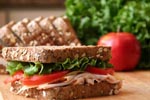
Make a bone-building sandwich - 10 food pairs to supercharge your diet


Add rosemary to rubs or marinades


Kansas State University scientists found that antioxidants in rosemary limit the formation of carcinogenic compounds called heterocyclic amines, which can form when beef patties are fried.
Add rosemary to rubs or marinades - 10 food pairs to supercharge your diet

Order a cup of joe with your post-exercise snack


Order a cup of joe with your post-exercise snack - 10 food pairs to supercharge your dietAustralian researchers found that subjects who combined carbs with caffeine after an exercise session replenished their muscle energy stores faster than people who ate only carbohydrates.

Saturday, October 23, 2010

Healthy Snacking


Snacking isn’t “bad” if you do it in moderation and make healthy choices.  Healthy, good-for-you snacks can be a part of a healthy diet – which you need to do to live healthfully. 
To snack the sensible way, choose nutrient-rich snacks like those listed below:


  • Apples and Breadsticks
  • Carrot and celery sticks
  • Green pepper sticks
  • Zucchini circles
  • Radishes
  • Broccoli spears
  • Cauliflower
  • Unsalted rice cakes


  • Unsweetened canned fruit
  • Thin slice of angel food cake
  • Baked apple
  • Raisins
  • Dried fruit gelatin gems
  • Frozen bananas
  • Frozen grapes
  • Fresh fruit
  • Low-fat or fat-free unsweetened fruit yogurt

  • Unsalted sunflower seeds
  • Whole-grain breads or toast
  • Cherry or grape tomatoes
  • Low-fat or fat-free cheese
  • Plain, low-fat or fat-free yogurt
  • Bagels


  • Clear soups, such as homemade or low-sodium canned vegetable or tomato soup
  • Cocoa made with nonfat milk


  • Fat-free milk
  • Unsweetened juices
  • Low-sodium tomato or mixed vegetable juice
  • Water


Tuesday, October 19, 2010

Healthy Eating: Easy Tips for Planning a Healthy Diet and Sticking to It

Healthy Eating


Healthy Eating: Guide to New Food Pyramids and Tips for a Healthy Diet
Healthy eating is not about strict nutrition philosophies, staying unrealistically thin, or depriving yourself of the foods you love. Rather, it’s about feeling great, having more energy, and keeping yourself as healthy as possible– all of which can be achieved by learning some nutrition basics and using them in a way that works for you.

Healthy eating begins with learning how to “eat smart”—it’s not just what you eat, but how you eat. Your food choices can reduce your risk of illnesses such as heart disease, cancer, and diabetes, as well as defend against depression. Additionally, learning the habits of healthy eating can improve your health by boosting your energy, sharpening your memory and stabilizing your mood. Expand your range of healthy food choices and learn how to plan ahead to create and maintain a satisfying, healthy diet.

Healthy eating tip 1: Set yourself up for success  

To set yourself up for success, think about planning a healthy diet as a number of small, manageable steps rather than one big drastic change. If you approach the changes gradually and with commitment, you will have a healthy diet sooner than you think.
  • Simplify. Instead of being overly concerned with counting calories or measuring portion sizes, think of your diet in terms of color, variety and freshness—then it should be easier to make healthy choices. Focus on finding foods you love and easy recipes that incorporate a few fresh ingredients. Gradually, your diet will become healthier and more delicious.
  • Start slow and make changes to your eating habits over time. Trying to make your diet healthy overnight isn’t realistic or smart.  Changing everything at once usually leads to cheating or giving up on your new eating plan. Make small steps, like adding a salad (full of different color vegetables) to your diet once a day or switching from butter to olive oil when cooking.  As your small changes become habit, you can continue to add more healthy choices to your diet.
  • Every change you make to improve your diet matters. You don’t have to be perfect and you don’t have to completely eliminate foods you enjoy to have a healthy diet.  The long term goal is to feel good, have more energy and reduce the risk of cancer and disease. Don’t let your missteps derail you—every healthy food choice you make counts.

Think of exercise as a food group in your diet.

Find something active that you like to do and add it to your day, just like you would add healthy greens, blueberries or salmon. The benefits of lifelong exercise are abundant and regular exercise may even motivate you to make healthy food choices a habit.

Healthy eating tip 2: Moderation is key 

People often think of healthy eating as an all or nothing proposition, but a key foundation for any healthy diet is moderation.  Despite what certain fad diets would have you believe, we all need a balance of carbohydrates, protein, fat, fiber, vitamins, and minerals to sustain a healthy body.
  • Try not to think of certain foods as “off limits.” When you ban certain foods or food groups, it is natural to want those foods more, and then feel like a failure if you give in to temptation. If you are drawn towards sweet, salty or unhealthy foods, start by reducing portion sizes and not eating them as often. Later you may find yourself craving them less or thinking of them as only occasional indulgences.
  • Think smaller portions. Serving sizes have ballooned recently, particularly in restaurants. When dining out, choose a starter instead of an entrĂ©e, split a dish with a friend, and don’t order supersized anything. At home, use smaller plates, think about serving sizes in realistic terms and start small.  Visual cues can help with portion sizes—your serving of meat, fish or chicken should be the size of a deck of cards. A teaspoon of oil or salad dressing is about the size of a matchbook and your slice of bread should be the size of a CD case.

Healthy eating tip 3: It's not just what you eat, it's how you eat 

Healthy eating is about more than the food on your plate—it is also about how you think about food. Healthy eating habits can be learned and it is important to slow down and think about food as nourishment rather than just something to gulp down in between meetings or on the way to pick up the kids.
  • Eat with others whenever possible. Eating with other people has numerous social and emotional benefits—particularly for children—and allows you to model healthy eating habits. Eating in front of the TV or computer often leads to mindless overeating.
  • Take time to chew your food and enjoy mealtimes. Chew your food slowly, savoring every bite. We tend to rush though our meals, forgetting to actually taste the flavors and feel the textures of what is in our mouths. Reconnect with the joy of eating.
  • Listen to your body. Ask yourself if you are really hungry, or have a glass of water to see if you are thirsty instead of hungry. During a meal, stop eating before you feel full. It actually takes a few minutes for your brain to tell your body that it has had enough food, so eat slowly.
  • Eat breakfast, and eat smaller meals throughout the day. A healthy breakfast can jumpstart your metabolism, and eating small, healthy meals throughout the day (rather than the standard three large meals) keeps your energy up and your metabolism going.

Healthy eating tip 4: Fill up on colorful fruits and vegetables 

Eat a rainbow of fruits and vegetables every day—the brighter the better. Fruits and vegetables are the foundation of a healthy diet—they are low in calories and nutrient dense, which means they are packed with vitamins, minerals, antioxidants and fiber. Fruits and vegetables should be part of every meal and your first choice for a snack—aim for a minimum of five portions each day. The antioxidants and other nutrients in fruits and vegetables help protect against certain types of cancer and other diseases.

Eat a rainbow of fruits and vegetables every day—the brighter the better. 

The brighter, deeper colored fruits and vegetables contain higher concentrations of vitamins, minerals and antioxidants—and different colors provide different benefits. Some great choices are:
  • Greens: Greens are packed with calcium, magnesium, iron, potassium, zinc, vitamins A, C, E and K, and they help strengthen the blood and respiratory systems. Be adventurous with your greens and branch out beyond bright and dark green lettuce—kale, mustard greens, broccoli, Chinese cabbage are just a few of the options.
  • Sweet vegetables: Naturally sweet vegetables add healthy sweetness to your meals and reduce your cravings for other sweets. Some examples of sweet vegetables are corn, carrots, beets, sweet potatoes or yams, winter squash, and onions.
  • Fruit: A wide variety of fruit is also vital to a healthy diet. Fruit provides fiber, vitamins and antioxidants. Berries are cancer-fighting, apples provide fiber, oranges and mangos offer vitamin C, and so on.

Don’t forget to shop fresh and local whenever possible

The local farmer’s market, fruit stand or Community Supported Agriculture (CSA) group are great ways to get access to fresh, local produce. To find local growers, farmer's markets, and CSAs in your area, visit Local Harvest.
Avoid: Fruit juices, which can contain up to 10 teaspoons of sugar per cup; avoid or dilute with water. Canned fruit is often in sugary syrup, and dried fruit, while an excellent source of fiber, can be high in calories. Avoid fried veggies and those with dressings or sauces—too much unhealthy fat and calories.

Water—a vital part of a healthy diet

Water makes up about 75% of our bodies and helps flush our systems of waste products and toxins. Yet many people go through life dehydrated—causing tiredness, low energy and headaches.

Caffeinated beverages, in particular, actually cause the body to lose water. Fresh fruits and vegetables, on the other hand, contain plenty of water and can help with hydration, especially when you are looking for an alternative to your eighth glass of water for the day.

Healthy eating tip 5: Eat more healthy carbs and whole grains

Choose healthy carbohydrates and fiber sources, especially whole grains, for long lasting energy. In addition to being delicious and satisfying, whole grains are rich in phytochemicals and antioxidants, which help to protect against coronary heart disease, certain cancers, and diabetes. Studies have shown people who eat more whole grains tend to have a healthier heart.

A quick definition of healthy carbs and unhealthy carbs

Healthy carbs (sometimes known as good carbs) include whole grains, beans, fruits, and vegetables. Healthy carbs are digested slowly, helping you feel full longer and keeping blood sugar and insulin levels stable.
Unhealthy carbs (or bad carbs) are foods such as white flour, refined sugar and white rice that have been stripped of all bran, fiber and nutrients. Unhealthy carbs digest quickly and cause spikes in blood sugar levels and energy.
  • Include a variety of whole grains in your healthy diet, including whole wheat, brown rice, millet, quinoa, and barley. Experiment with different grains to find your favorites.
  • Make sure you're really getting whole grains. Be aware that the words stone-ground, multi-grain, 100% wheat, or bran, don’t necessarily mean that a product is whole grain. Look for the new Whole Grain Stamp. If there is no stamp look for the words “whole grain” or “100% whole wheat,” and check the ingredients.
  • Try mixing grains as a first step to switching to whole grains. If whole grains, like brown rice and whole wheat pasta, don’t sound good at first, start by mixing what you normally use with the whole grains. You can gradually increase the whole grain to 100%.
Avoid: Refined grains such as breads, pastas, and breakfast cereals that are not whole grain.

Fiber: An essential component of a healthy diet

Dietary fiber, found in plant foods (fruit, vegetables and whole grains) is essential for maintaining a healthy digestive system. Fiber helps support a healthy diet by helping you feel full faster and for a longer amount of time, and keeping your blood sugar stable. A healthy diet contains approximately 20-30 grams of fiber a day, but most of us only get about half that amount.
The two types of fiber are soluble and insoluble.
  • Soluble fiber can dissolve in water and can also help to lower blood fats and maintain blood sugar. Primary sources are beans, fruit and oat products.
  • Insoluble fiber cannot dissolve in water, so it passes directly through the digestive system. It’s found in whole grain products and vegetables.

Healthy eating tip 6: Enjoy healthy fats & avoid unhealthy fats

Good sources of healthy fat are needed to nourish your brain, heart and cells, as well as your hair, skin, and nails.  Foods rich in certain omega-3 fats called EPA and DHA are particularly important and can reduce cardiovascular disease, improve your mood and help prevent dementia.
Add to your healthy diet:
  • Monounsaturated fats, from plant oils like canola oil, peanut oil, and olive oil, as well as avocados, nuts (like almonds, hazelnuts, and pecans) and seeds (such as pumpkin, sesame).
  • Polyunsaturated fats, including Omega-3 and Omega-6 fatty acids, found in fatty fish such as salmon, herring, mackerel, anchovies, sardines, and some cold water fish oil supplements. Other sources of polyunsaturated fats are unheated sunflower, corn, soybean, and flaxseed oils, and walnuts.
Reduce or eliminate from your diet:
  • Saturated fats, found primarily in animal sources including red meat and whole milk dairy products.
  • Trans fats, found in vegetable shortenings, some margarines, crackers, candies, cookies, snack foods, fried foods, baked goods, and other processed foods made with partially hydrogenated vegetable oils.

Healthy eating tip 7: Put protein in perspective

Sizzling Salmon Protein gives us the energy to get up and go—and keep going. Protein in food is broken down into the 20 amino acids that are the body’s basic building blocks for growth and energy, and essential for maintaining cells, tissues and organs. A lack of protein in our diet can slow growth, reduce muscle mass, lower immunity, and weaken the heart and respiratory system. Protein is particularly important for children, whose bodies are growing and changing daily.
Here are some guidelines for including protein in your healthy diet:
Try different types of protein. Whether or not you are a vegetarian, trying different protein sources—such as beans, nuts, seeds, peas, tofu and soy products—will open up new options for healthy mealtimes.
  • Beans:  Black beans, navy beans, garbanzos, and lentils are good options.
  • Nuts: Almonds, walnuts, pistachios and pecans are great choices.
  • Soy products: Try tofu, soy milk, tempeh and veggie burgers for a change.
  • Avoid salted or sugary nuts and refried beans.
Downsize your portions of protein. Most people in the U.S. eat too much protein. Try to move away from protein being the center of your meal. Focus on equal servings of protein, whole grains, and vegetables.
Focus on quality sources of protein, like fresh fish, chicken or turkey, tofu, eggs, beans or nuts. When you are having meat, chicken, or turkey, buy meat that is free of hormones and antibiotics.

Complete, incomplete and complementary proteins

  • A complete protein source—from animal proteins such as meat, poultry, fish, milk, cheese and eggs—provides all of the essential amino acids.
  • An incomplete protein—from vegetable proteins like grains, legumes, nuts, seeds and beans—is low in one or more essential amino acids.
  • Complementary proteins are two or more incomplete protein sources that together provide all of the essential amino acids your body needs. For example, rice and dry beans are each incomplete proteins, but together they provide all of the essential amino acids.
  • Do complementary proteins need to be eaten in the same meal?  Research shows that your body can combine complementary proteins that are eaten within the same day.
  • Why are complete and complementary proteins important? Complete and complementary proteins that provide all of the essential amino acids will fill you up longer than carbohydrates because they break down more slowly in the digestive process.

Healthy eating tip 8: Add calcium & vitamin D for strong bones


Calcium and vitamin D are essential for strong, healthy bones—vitamin D is essential for optimum calcium absorption in the small intestine. Recommended calcium levels are 1000 mg per day, 1200 mg if you are over 50 years old. Take a vitamin D and calcium supplement if you don’t get enough of these nutrients from your diet.

Great sources of calcium include:
  • Dairy products, which come already fortified with vitamin D.
  • Dark green, leafy vegetables, such as kale and collard greens
  • Dried beans and legumes

Healthy eating tip 9: Limit sugar, salt, and refined grains

If you succeed in planning your diet around fiber-rich fruits, vegetables, whole grains, lean protein, and good fats, you may find yourself naturally cutting back on foods that can get in the way of your healthy diet—sugar, salt and refined starches.

Sugar and refined starches

It is okay to enjoy sweets in moderation, but try to cut down on sugar. Sugar causes energy ups and downs and adds to health problems like arthritis, diabetes, osteoporosis, headaches, and depression.
  • Give recipes a makeover. Often recipes taste just as good with less sugar.
  • Avoid sugary drinks. One 12-oz soda has about 10 teaspoons of sugar in it! Try sparkling water with lemon or a splash of fruit juice.
  • Eliminate processed foods. Processed foods and foods made with white flour and white sugar cause your blood sugar to go up and down leaving you tired and sapped of energy.

Salt

Salt itself is not bad, but most of us consume too much salt in our diets.
  • Limit sodium to 2,300 mg per day, the equivalent to one teaspoon of salt. Most of us consume far more than one teaspoon of salt per day.
  • Avoid processed, packaged, restaurant and fast food. Processed foods like canned soups or frozen meals contain hidden sodium that quickly surpasses the recommended teaspoon a day.

Healthy eating tip 10:  Plan quick and easy meals ahead 

Healthy eating starts with great planning. You will have won half the healthy diet battle if you have a well-stocked kitchen, a stash of quick and easy recipes, and plenty of healthy snacks.

Plan your meals by the week or even the month 

One of the best ways to have a healthy diet is to prepare your own food and eat in regularly. Pick a few healthy recipes that you and your family like and build a meal schedule around them. If you have three or four meals planned per week and eat leftovers on the other nights, you will be much farther ahead than if you are eating out or having frozen dinners most nights.

Shop the perimeter of the grocery store

 In general, healthy eating ingredients are found around the outer edges of most grocery stores—fresh fruits and vegetables, fish and poultry, whole grain breads and dairy products. The centers of many grocery stores are filled with overpriced, processed foods that aren’t good for you. Shop the perimeter of the store for most of your groceries (fresh items), add a few things from the freezer section (frozen fruits and vegetables), and the aisles with spices, oils, and whole grains (like rolled oats, brown rice, whole wheat pasta).

Cook when you can

Try to cook one or both weekend days or on a weekday evening and make extra to freeze or set aside for another night. Cooking ahead saves time and money, and it is gratifying to know that you have a home cooked meal waiting to be eaten.

Have an emergency dinner or two ready to go

Challenge yourself to come up with two or three dinners that can be put together without going to the store—utilizing things in your pantry, freezer and spice rack. A delicious dinner of whole grain pasta with a quick tomato sauce or a quick and easy black bean quesadilla on a whole wheat flour tortilla (among endless other recipes) could act as your go-to meal when you are just too busy to shop or cook.

Stock your kitchen to be meal ready


Try to keep your kitchen stocked with recipe basics:
  • Fresh and frozen fruits and vegetables.
  • Recipe and soup starters such as garlic, onions, carrots, and celery.
  • Healthy staples like brown rice, white Basmati rice, whole-wheat pasta, quinoa, and wild rice.
  • Whole wheat bread and tortillas for healthy sandwiches and wraps.
  • Beans such as lentils, black beans, chickpeas, black-eyed peas, kidney beans, fava beans, and lima beans.
  • Frozen corn, peas, and other vegetables to add to recipes or for a quick vegetable side dish.
  • Frozen fruit and berries to make smoothies or frozen desserts.
  • Dark greens for salads, plus salad add-ins like dried fruit, nuts, beans, and seeds.
  • Fresh and dried herbs and spices.
  • Healthy fats and oils for cooking, such as olive oil and canola oil. You can also try specialty oils like peanut, sesame, or truffle oil for adding flavor.
  • Unsalted nuts for snacking, like almonds, walnuts, cashews, peanuts, and pistachios.
  • Vinegars, such as balsamic, red wine, and rice vinegar for salads and veggies.
  • Strong cheeses, like aged Parmesan or blue cheese for intense flavor in salads, pasta, and soups.

Diet Recipe: Wheat Berry Salad with Coronation Grapes


This salad is full of savoury Mediterranean-inspired flavours, which are perfectly complemented by sweet Niagara Coronation grapes. This hearty and healthy salad can be prepared in less than 45 minutes.
Ingredients

1 cup wheat berries (wheat kernels)     
1/2 cup minced red onion    
1/4 cup extra virgin olive oil, divided    
2 tbsp red wine vinegar    
1 tsp kosher salt    
1/2 tsp fresh cracked pepper    
1/2 cup finely diced red pepper    
1/2 cup finely diced cucumber    
2 cups halved Ontario Coronation grapes    
1/2 cup toasted walnuts, roughly chopped    
1/4 cup minced fresh basil    
1/4 cup crumbled feta

Materials

Tip: To showcase the beauty of this recipe’s vivid colours, try serving in a glass bowl.

Directions

1.         Cook wheat berries in a large pot of boiling, salted water (uncovered) until they are soft, about 20  minutes. Drain in sieve.
2.         In skillet, heat 1 tbsp (15 mL) of the oil over medium high-heat. Add red onion and cook, stirring often, until softened, about 5 minutes. Remove from heat. Pour in remaining oil, vinegar, salt and pepper. Add warm wheat berries, red pepper, cucumber, grapes and basil and toss to combine. Transfer to a bowl and let salad rest for at least 30 minutes, tossing occasionally so the wheat can absorb the dressing.
3.         Sprinkle with feta and serve at room temperature.

Makes 6 servings


Nutritional information

Per serving: About 290 cal, 6 g pro, 18 g total fat (2 g sat fat), 30 g carb, 4 g fibre, 5mg chol, 360 mg sodium.

Recipe provided by Ontario Tender Fruit Producers


Friday, October 15, 2010

Raw Food Weight Loss Diet

Free raw food diet plan and recipes to loose weight
"You must begin to think of yourself as becoming the person you want to be." David Viscott
Weight loss doesn't have to be hard, painful or full of denial. You don't have to be deprived or depressed. You deserve to know how to lose weight easily and without feeling hungry.
Raw Food Diet Health
All of your planning for the raw food weight loss diet has been done for you RIGHT HERE! Even your kids will be exited about all of these delicious, fun and easy raw food recipes, diet plans, menus, shopping lists and time saving ideas.
Let's get started on the best raw food weight loss diet ever with these free planning ideas:

Raw Food Weight Loss - Diet Plan

Begin memorizing these 4 Weight Loss Rules and you'll be on your ROAD to weight loss success:
  • Eat Raw
  • Eat Organic
  • Eat Alkaline
  • Eat Delicious
Also remember that you can eat as much, as often and as pleasurable as you like.

Rule 1: Eat RAW

Examples of raw food dishes:
  • Raw fish: sashimi, ceviche, cold smoked or cured fish
  • Raw cheese: raw goat cheese, raw sheep cheese;
  • Raw nuts, Seeds;
  • Raw and dried fruit;
  • Raw and dried veggies;
  • Raw soups: gazpacho, cucumber;
  • Super foods
  • Raw meats: steak tartar, filet americain, cold smoked or cured meats
  • Sprouted breads, bagels, tortilla wraps
  • Raw cakes, ice-creams, smoothies, alcoholic drinks, juices, cookies, snacks
You see, eating raw is just another way of preparing your food. But the variety and kind of foods largely remain the same. It's fun!

Rule 2: Eat ALKALINE


You're fat because your acid. Eating alkalizing foods will make you thin. It's that easy. In other words, you'll only achieve healthy long term weight loss when your body has an alkaline pH.
Simply put. All (green) vegetables and herbs are alkalizing. Fruits are neutral or slightly acid forming. Most nuts and seeds are slightly acidic.
For a full list of alkaline foods click here.
To make sure your diet is alkaline - and this is slightly different for everyone - you must test yourself daily. You can do this very easily and cheap with pH test strips.

Rule 3: Eat ORGANIC

One of the advantages of organic foods is that they contain much more nutrients, including alkalizing minerals than conventional grown foods. Thus eating organic speeds up weight loss.

Rule 4: Eat DELICIOUS

You'll only succeed on a raw food weight loss diet if the food you eat is delicious. Thus make sure you buy the best, freshest and most delicious ingredients. These are fresh, organic and locally grown. Then, use the tastiest recipes. Don't be cheap on your food - you deserve the best.

Remember the 4 raw food weight loss diet rules for your ROAD to SUCCESS?
  • Eat Raw
  • Eat Organic
  • Eat Alkaline
  • Eat Delicious
On this diet it's hard NOT to lose weight!.
Now you know what to eat, it's time to make up your raw food diet plan. Or browse through the raw food recipes for weight loss.

The possibilities are endless and delicious!

Raw Food Diet Conversion Chart

You are interested in a raw food diet. Now you have to decide what to eat. To help you with the transition from cooked to raw, here's a raw food conversion chart.
The chart has the following categories:
1.      Food
2.      Beverages
3.      Condiments and Spreads
4.      Special Treats
5.      Supplements
6.      General Guidelines

1. Food

Bad
Better
Best
Sugar
All forms:
- Dextrose
- Corn syrup
- Rice syrup
- Malt
Raw honey
Agave
Maple syrup
Raw fresh fruits
Raisins
Dates
Stevia
Vanilla
Cinnamon
Artificial Sweeteners
All forms:
- Aspartame
- Splenda
- Xylitol

Stevia
Vanilla
Cinnamon
Salt
Table salt
Unrefined sea salt
Unrefined Himalaya sea salt
Organic salt from plants:
Celery
Seaweed
Phytoplankton
Flour
White flours from:
- Wheat
- Corn
- Rice, etc.
Organic whole flours from:
- Spelt*
- Kamut
- Quinoa
- Buckwheat
- Millet
- Brown rice*
- Other non stored grains
stored grain
Sprouted grains
Almond flour
Coconut flour
Bread
From supermarket
Home made
Health store
Yeast free
Wheat free
Sprouted
Dehydrated flax crackers
Essence bread
Lettuce wraps
Pasta
White pasta
Organic spelt or buckwheat
Sprouted pasta
(Raw) spaghetti made from squash
Fat
Butter
Shortening
Margarine
Chemicals
Trans fats
Animal fats
Fermented fats
Cold pressed coconut oil
Olive oil
Hemp seed oil
Flax seed oil
Whole hemp seeds
Whole organic flax Seeds
Nuts
Fresh coconut
Meat
Cold cuts
Processed meat:
Hot dogs
Bacon
Salami, etc.
Organic raised
Nitrites free
E-numbers free (EU)
MSG free, etc.
Vegan nut pate's
Raw "meat" balls
made from nuts/seeds
Fish
Farm raised fish

Wild fish
Not endangered
Wild Alaskan fish
Caught same day
Cold smoked wild Alaskan salmon
Eggs
Conventional eggs
Organic farm free eggs
Egg replacers:
- Agar agar
- Flax seed
- Psyllium fiber
Cheese
Cheese
From cow
Pasteurized
Not organic
Homogenized

Organic raw goat cheese
Organic raw sheep's cheese
Nut cheese
Seed cheese
Milk & Yoghurt
Milk, yoghurt
From cow
Pasteurized
Homogenized

Organic milk
Raw goat's milk
Almond milk from store
Rice milk
Coconut milk
Raw almond milk
Raw milk from nuts
Raw milk from seeds & grains
Raw coconut juice & milk

2. Beverages

Bad
Better
Best
Water from tap
Plastic bottled water
Evian, Poland Spring, Fuji Water
Distilled water
Low mineral spring water
Bottled in glass
Thee
Black tea

Herbal teas
Coffee
Coffee
Decaffeinated coffee
Coffee replacer
Soft Drinks
Lemonade
Jam
Soft drinks
Fruit juices
Organic fresh juices
Flash pasteurized
Freshly squeezed juice:
Fruit juice
Orange Juice
Vegetable juices
Green powder juice
Juice fresh from juice bar
super foods drinks
Coconut water (fresh)
Smoothies
Home made lemonade w stevia

3. Condiments and Spreads

Bad
Better
Best
Tomato Ketchup
Tomato ketchup
From supermarket
Organic, sugar free ketchup
Home made ketchup
Raw ketchup
Mayonnaise
From super marked
Organic, no sugar added
Home made
Raw home made mayonnaise
Raw mayonnaise made from avocado
Raw mayonnaise made from nuts/seeds
Pasta Sauces
From package
Cans
Mac n cheese
Ready made
From health food store
Organic
Home made
Pesto sauce
Tomato sauce
Organic Cheeses
Fresh raw tomato sauce
Raw pesto
Nut cheese
Salsa
Bread Spreads
Cold cuts
Processed meat
Jam
Chocolate spreads
Cheese
Organic almond butter
Jam/Jelly 100% fruit
Raw honey
Raw cheese
Avocado
Pesto
Tapenade
Salsa
Guacamole
Nut pates
Nut cheeses
Coconut butter

4. Special Treats

Bad
Better
Best
Candy
Candy from supermarket
Energy bars
Diet bars
Chips
Cookies
Organic from health store:
- Candy
- Chips
- Cookies
- Popcorn
Larabars
Raw Cookies
Raw cakes
Fresh fruits
Dried fruits
Dehydrated crackers/chips
Cookies, Cakes
Cookies from super marked
Cakes from super marked
Organic from health store
Home made cookies
Home made cakes
Raw cookies & cakes
Raw cakes & pies
Dehydrated cookies

5. Supplements

Bad
Better
Best
Supplements
Vitamins
Supplements
Vitamins
From supermarket
From drugstore
Supplements from some small companies
Whole foods supplements
Super foods
Green powders

6. General Guidelines

Bad
Better
Best
Resources
Grocery store
Health store
Home made foods
Green/farmer's market
Grown
Conventional grown
Organic foods
Naturally grown
No pesticides, herbicides, chemicals
Local farmer's/green market
Wild
Local and organic
Own garden, sprouts
Processed
Junk
Pre-packaged
Fast food
Grilled
Microwaved
BBQ
Fried
Steamed
Cooked
Stir fried
Baked at low temperatures
Ingredients
Many ingredients
Conservatives
Sweeteners
Chemicals
E-numbers
MSG, flavor enhancers, etc.
Few ingredients
Ingredients you can pronounce
Home made
All fresh ingredients


Hygienic Food Storage Tips


Hygienic Food Storage Tips -- powered by eHow.com

What is a Healthy Diet?


Receipe: Butternuts Squash